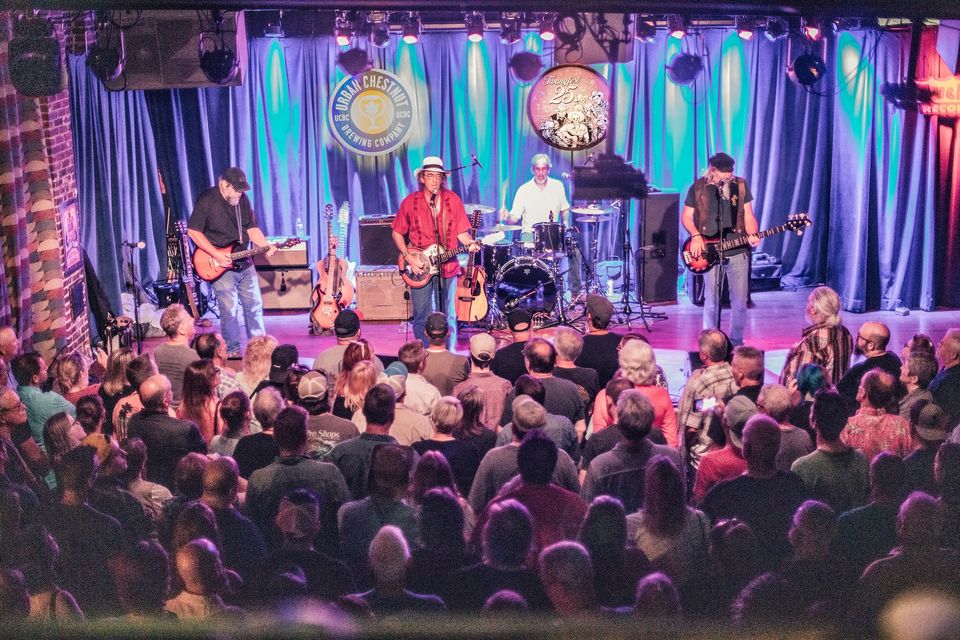
We welcome you to Twangfest, which is still the best music festival you’ll ever attend, if you’ll allow us a moment of immodesty. It’s a place where incredible musical performers from all over the country play before the most fervent bunch of music lovers that they or you will ever meet. We often say that Twangfest is a big tent; the big top of a musical three-ring circus, filled with the sights and sounds that make roots music so vibrant and inspirational. And we’re glad that you could join us under the virtual canvas roof of our big tent, be it for a night or for the full four-day run. So get ready to fill your ears and feast your eyes, and be sure to introduce yourself to friends new and old, and support the bands and Twangfest by visiting the merchandise tables. But most of all … have yourself a great time! In fact, we dare you not to.

Twangfest is not just an event; it’s also a nonprofit organization working to preserve and promote the unique tradition and culture of Americana music.

Musician Dale Watson says,

Twangfest is the future survival of country music…and a home for us survivalists.

Read more about Twangfest, its mission, and its history below.

In 1997, a group of friends (all of whom met through an Internet mailing list) in different cities around the U.S. organized the first Twangfest, a raucous two-day celebration in St. Louis showcasing both up-and-coming and established Americana bands. The event proved so successful that a second Twangfest was held in 1998, to even greater enthusiasm. The third annual Twangfest in 1999 grew to three days and nights. We expanded to four nights for Twangfest 5 in 2002 — one night at the Tap Room at Schlafly Brewery followed by three nights at the Duck Room at Blueberry Hill.

We’ve continued to expand the breadth of our musical offerings each year. Our lineups have featured a wide range of artists, from twangy rockers such as Slobberbone (Twangfest 6) to bluegrass masters like the Lonesome River Band (Twangfest 4) to hard country artists such as Roger Wallace (Twangfest 4) and Dallas Wayne (Twangfest 6). The bands that play Twangfest may have started in indie rock clubs, as the Ass Ponys (Twangfest 5) did, or in churches, like Calvin Cooke and the Sacred Steel Ensemble (Twangfest 6), but all embody the best of American roots music.

Jon Weisberger, a veteran bluegrass musician, a Twangfest 1998 performer, and writer for Bluegrass Unlimited, notes:

Twangfest is not only a great showcase for the whole range of “alternative country” — everything from bluegrass to rootsy rock’n'roll — it’s the creation of a modern-day community, the cyber-neighborhood of Postcard2, giving it an up-close-and-personal flavor unmatched by other music festivals. Most importantly, it’s a hell of a good time. When the history of alternative country is written, I’m confident it will be cited as a turning point, when the alt.country cyber-community materialized to give the genre a significant boost, not to mention one hell of a good time.

In addition to its annual showcase in St. Louis, Twangfest also sponsors an annual CD, Edges from the Postcard,a compilation that presents songs by up-and-coming and established Americana bands. We also host an event during SXSW week in Austin, Texas in March each year. This event showcases past and future Twangfest performers and serves to inform the public about Twangfest and its mission.

In 2000, Twangfest became a registered nonprofit 501 (c)(3) organization, with an official mission to to preserve and promote the unique tradition and culture of Americana music.

Americana is a unique musical form, blending traditional and contemporary elements of American folk and popular music. It creates new combinations that rearticulate older forms — such as Western Swing, Rhythm and Blues, Appalachian mountain music, bluegrass, honky-tonk, polka, and rockabilly — in terms of present-day social and artistic concerns. Primarily supported by grassroots initiatives and the efforts of its practitioners, Americana is a recognized and influential genre of contemporary popular music, although not one that is central to the profit-motivated categories generally promoted by the recording industry.

Our Goals, through our online and off-line activities, are:

For more people to learn about the history and nature of Americana music, how this musical form draws from earlier American music traditions, and how Americana influences other musical traditions (country, rock and roll, pop, and so on).

To encourage people of all ages to create music in the Americana genre, which further preserves the style and promotes it to a larger audience.

To give people an opportunity to learn about the business of organizing music events and about the many stages of producing a CD, to gain experience that they can utilize in their further professional or artistic development.

Visit Our Sponsors